
How to Get Out of Credit Card Debt in India: A Practical Plan
28 September 2026 · BestCard Editorial Team
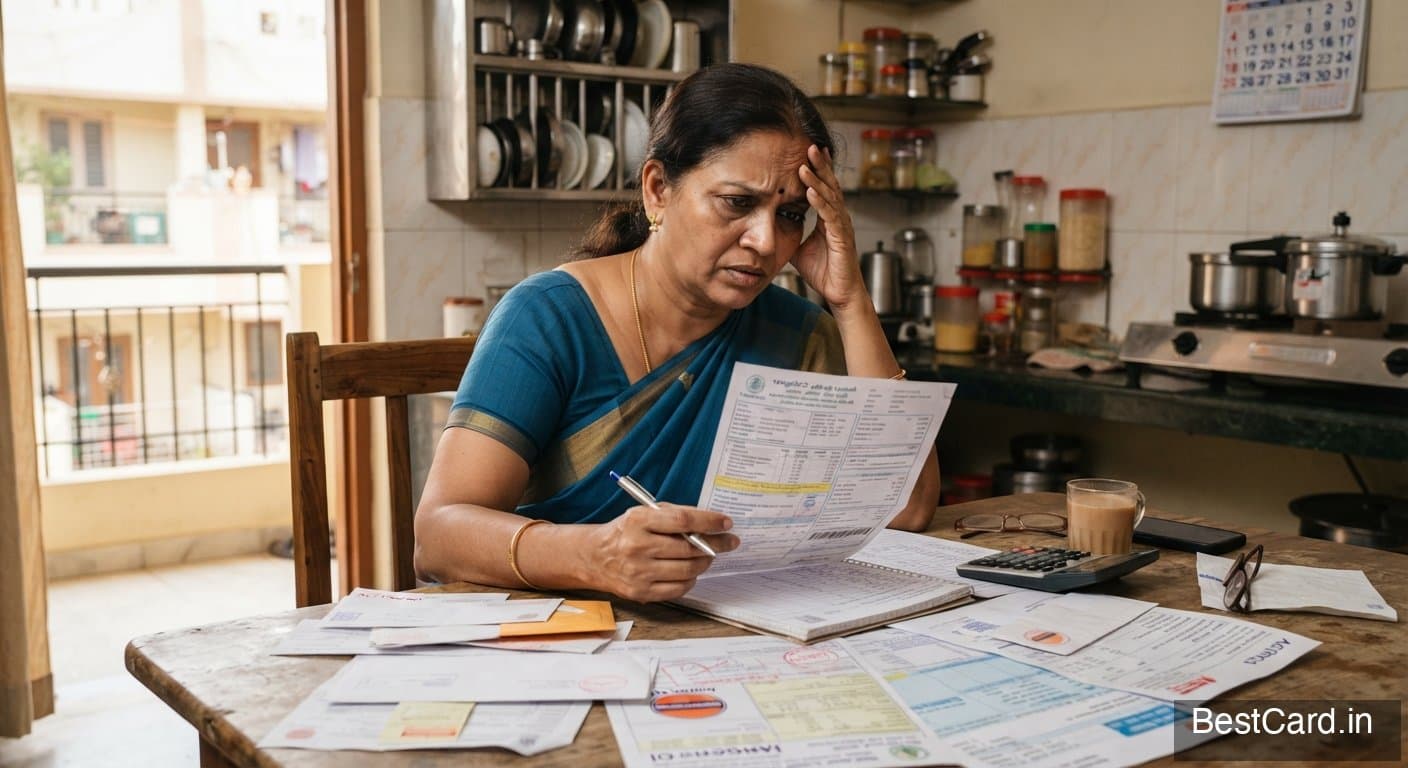
To get out of credit card debt in India, stop the interest from growing first, then pay the balance down with a fixed plan. That means pausing new spending on the card, moving the balance to cheaper debt (a personal loan, balance transfer or EMI conversion), and putting every spare rupee towards the costliest balance. Avoid paying only the minimum due and avoid settlement unless you truly have no other option.
Why credit card debt grows so fast
Card interest in India is often in the range of about 3% to 3.75% a month on many cards, which works out to roughly 36% to 45% a year, and 18% GST is added on top of the interest. Your card's exact rate is in its most important terms and conditions (MITC); our interest rates by bank guide collects them.
Two more things make it worse:
- You lose the interest-free period. Once you carry a balance, new purchases attract interest from the day you make them.
- Interest is charged on the full balance, not just the part you didn't pay.
Example. You owe ₹1,00,000 at 3.5% a month and pay only the minimum due of about 5%. In month one, interest is ₹3,500 and GST on it is ₹630. Your ₹5,000 payment reduces the balance by only ₹870. At this pace it takes years to clear, and you pay more in interest than you borrowed. Our minimum due trap explainer works through the full timeline.
Step 1: Stop the bleeding
- Stop using the cards that carry a balance. Take them out of saved payment methods in apps and wallets.
- Switch daily spending to UPI or debit until the debt is under control.
- List every debt. For each card note the balance, monthly interest rate, minimum due and due date.
- Always pay at least the minimum due on time. It stops late fees and protects your credit report while you work on the bigger fix. Our guide to late payment consequences shows what a missed payment costs.
Step 2: Choose a payoff method
| Method | How it works | Best for |
|---|---|---|
| Avalanche | Pay minimums on all, put extra on the highest-interest balance | Saving the most interest |
| Snowball | Pay minimums on all, put extra on the smallest balance | Quick wins and motivation |
Avalanche example. You owe ₹80,000 on Card A at 3.75% a month and ₹40,000 on Card B at 3.5%. You can pay ₹15,000 a month. Pay the minimum on Card B and the rest on Card A. Once A is cleared, roll the whole ₹15,000 onto B. Because A has the higher rate, this costs less in total.
Snowball example. Same debts, but you clear the ₹40,000 card first. You pay slightly more interest, but closing a card in a few months can keep you going. Either method beats paying minimums everywhere.
Step 3: Make the debt cheaper
This is where you save the most money. You have four main options.
Personal loan
Personal loan rates are typically far lower than credit card interest. Taking a loan to clear the cards replaces open-ended card debt with a fixed EMI and an end date. Compare the loan's interest rate, processing fee and prepayment terms. Our credit card vs personal loan guide covers the trade-offs.
Balance transfer
Some banks let you move a balance from another bank's card at a lower interest rate for a fixed period, sometimes with a processing fee. It's useful if you can clear the balance within that period. See our balance transfer guide and the step-by-step on moving a balance to another bank.
EMI conversion on the same card
Most banks let you convert the outstanding balance, or specific large purchases, into EMIs at a lower rate than revolving interest. You'll pay a processing fee and GST on the interest, but the total cost is usually much lower than carrying the balance. Our EMI conversion guide explains how it works.
Use savings or a loan against assets
If you have an FD earning much less than your card's interest rate, breaking it to clear card debt often makes sense. A loan against an FD, gold or insurance policy is also usually cheaper than card interest.

Step 4: Talk to your bank
If you can't keep up even after cutting costs, call the bank before you fall behind. Banks often have hardship options: converting the balance into a long EMI plan, waiving some late fees, or restructuring repayments. Paying the full amount through a structured plan protects your credit far better than a settlement.
Why settlement should be a last resort
In a settlement, the bank accepts less than you owe and closes the account. It sounds like relief, but your credit report shows the account as "settled" rather than "closed", which lenders read as a sign that you didn't repay in full. It can make loans and new cards much harder to get for years. Our guide to settlement and CIBIL explains the impact and how to fix a settled account later.
Know your rights
RBI's rules require banks and their recovery agents to treat borrowers fairly: no threats, no abuse, no calls at unreasonable hours, and no contacting your family or colleagues to shame you. If that happens, complain in writing to the bank's grievance officer, and escalate to the RBI Ombudsman if it isn't resolved. Confirm the current rules on RBI's website.
Step 5: Rebuild so it doesn't happen again
Once the balance is gone:
- Pay the full statement amount every month. Set an autopay for the total due, not the minimum.
- Keep one simple card. A lifetime-free card with no temptation to chase rewards can help. Our list of no annual fee cards is a good starting point.
- Keep utilisation low. Using less of your limit helps your score recover.
- Build a small emergency fund so a surprise bill doesn't go on the card.
Common mistakes
- Paying only the minimum due and assuming the debt is shrinking.
- Opening a new card to pay off an old one without a plan.
- Taking a personal loan, clearing the cards, then running the cards up again.
- Ignoring calls from the bank, which removes the chance to negotiate.
- Choosing settlement before trying EMI conversion or a loan.
The bottom line
Getting out of credit card debt comes down to making it cheaper and paying it on a fixed schedule. Stop new spending, move the balance to a lower-rate loan or EMI, and focus your extra payments on one card at a time. Any card fees or rates mentioned across our guides come from BestCard's latest card data, and issuers change terms, so verify with your bank before acting. When you're debt-free and ready for a card that suits your habits, the card matcher can help you pick one.
Frequently asked questions
What is the fastest way to get out of credit card debt?
Stop adding new spending, then move the balance to cheaper debt such as a personal loan, balance transfer or EMI conversion, and put every spare rupee towards the highest-interest balance first.
Should I settle my credit card debt?
Only as a last resort. A settlement is recorded as 'settled' on your credit report, which hurts your score for years and makes future loans harder. Paying in full, even over a longer EMI plan, is better for your credit.
Is a personal loan good for paying off credit card debt?
Often yes. Personal loan rates are usually far lower than credit card interest, and a fixed EMI gives you an end date. It only works if you stop running up the cards again.
Can recovery agents harass me for credit card dues?
No. RBI rules prohibit harassment, threats and calls at unreasonable hours by banks and their recovery agents. You can complain to the bank's grievance officer and then the RBI Ombudsman.
Related reading
- Credit Card Settlement and CIBIL: What It Does to Your Score
How a credit card settlement hits your CIBIL score, how long the 'Settled' tag lasts, how to get it changed to 'Closed', and better options before you settle.
- How to Build Credit History From Scratch in India (2026 Guide)
No CIBIL score yet? Here is how to build credit history from scratch in India using a secured card, low utilisation and on-time payments, with rupee examples.
- Can You Pay a Mutual Fund SIP with a Credit Card in India?
Can you pay a mutual fund SIP with a credit card? Why AMCs and apps say no, the costly workarounds to avoid, and a smarter way to use your card for investing.