
Best Credit Cards for Tier 2 City Residents in India (2026)
4 October 2026 · BestCard Editorial Team
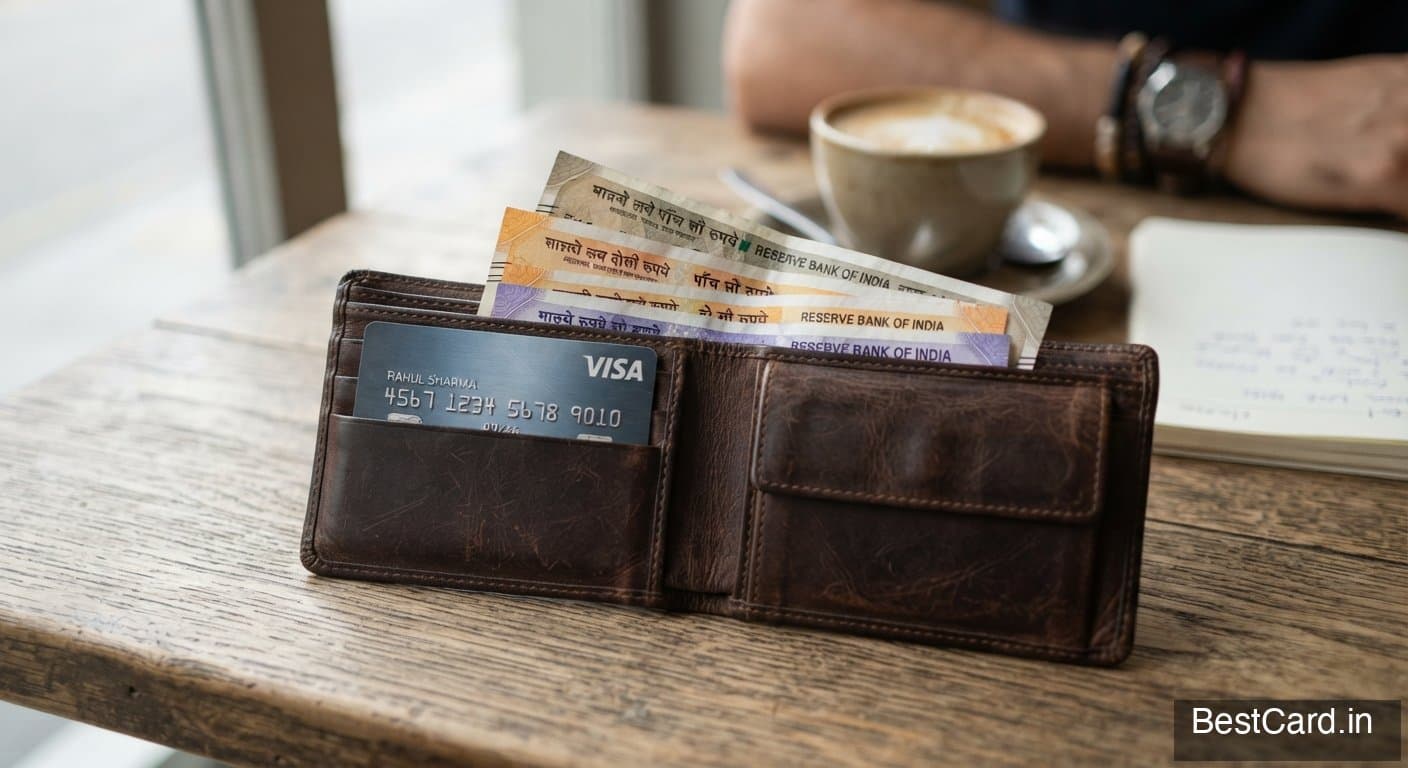
The best credit cards for tier 2 city residents in 2026 are RuPay cards you can use on UPI at local shops, like the HDFC IndianOil and AU Bank LIT cards, plus an online shopping card such as ICICI Amazon Pay or Flipkart Axis for the brands and products you can't buy locally. Spending in smaller cities runs mostly through kirana stores, fuel pumps, utility bills and e-commerce, so the right card rewards those, not airport lounges or fine dining.
Here's a shortlist built around how people in tier 2 and tier 3 cities actually spend, with the numbers from BestCard's card data.
How spending differs outside the metros
- UPI everywhere, card machines less so. Many local shops take UPI QR payments but don't have a card terminal. A RuPay credit card linked to UPI lets you pay on credit and earn rewards at those shops.
- Fuel is a big line item. Longer distances on two-wheelers and cars, with fewer metro or app-cab options.
- E-commerce fills the gaps. Brands, electronics and products that aren't stocked locally get bought on Amazon and Flipkart.
- Lounges matter less. Flights are less frequent, and the nearest airport may not have a lounge on your card's network.
- Approval is about paperwork and PIN codes. More applicants are self-employed or run businesses, and not every bank services every PIN code.
Shortlist at a glance
| Card | Annual fee | Fee waiver | Best for | Network | Min. income (monthly) |
|---|---|---|---|---|---|
| HDFC IndianOil | ₹500 | ₹50,000 | Fuel, groceries, bills | RuPay | ₹12,000 |
| AU Bank LIT | Free | NA | UPI spends, dining, online | RuPay | ₹15,000 |
| IDFC FIRST Power+ | ₹499 | ₹1.5 lakh | HPCL fuel, groceries, bills | RuPay | ₹25,000 |
| Axis ACE | ₹499 | ₹2 lakh | Flat 2% on general spends | See issuer | ₹15,000 |
| ICICI Amazon Pay | Free | NA | Amazon shopping | Visa | ₹30,000 |
| Flipkart Axis Bank | ₹500 | ₹3.5 lakh | Flipkart and Myntra | Visa | ₹15,000 |
The cards in detail
HDFC IndianOil: best all-rounder for daily household spend
5% value back on fuel, groceries and utility bills, each capped at ₹250 of rewards a month, plus a 1% fuel surcharge waiver on top. Points are worth ₹1 each, so the maths is simple. The ₹500 fee is waived at just ₹50,000 of annual spend, and the income bar is ₹12,000 a month, among the lowest in our data.
Worked example: ₹3,000 on fuel, ₹4,000 on groceries and ₹2,000 on bills each month. That's ₹150 + ₹200 + ₹100 = ₹450 a month, or ₹5,400 a year, all within the caps. Your ₹1.08 lakh of annual spend clears the ₹50,000 waiver comfortably. As a RuPay card, it can also be linked to UPI.
AU Bank LIT: best free card for UPI payments
Lifetime free, on RuPay, with 5% cashback on dining and online shopping (each capped at ₹500 a month) and the option to choose your bonus categories in the app. Link it to UPI and you can pay on credit at any shop with a QR code. It works best for people who will actually manage their category choices. Our guide to linking a RuPay card to UPI explains the setup.
IDFC FIRST Power+: best for HPCL fuel users
Up to 6.5% savings on HPCL fuel, 5% on groceries and utilities (with a monthly cap), 0% forex markup and a ₹500 cashback on your first fuel transaction. It's on RuPay, so UPI works too. One domestic lounge visit a quarter unlocks with ₹20,000 of spend in the previous month. The ₹499 fee is waived at ₹1.5 lakh a year. If your nearest pump is HPCL, this is the strongest fuel card on the list. For other fuel brands, see our best fuel credit cards guide.
Axis ACE: best flat-rate card for everything else
2% cashback on general spends with no category tracking, plus 5% on bill payments through Google Pay (capped at ₹500 a month) and 4 domestic lounge visits a year. On ₹10,000 of general spend and ₹3,000 of bills via Google Pay each month, you'd earn ₹200 + ₹150 = ₹350 a month, or ₹4,200 a year, on a ₹499 fee that's waived at ₹2 lakh. Apply for Axis ACE if you want one simple card for card-machine purchases.
ICICI Amazon Pay: best free card for Amazon shoppers
Lifetime free with 5% back on Amazon and 1% elsewhere, plus dining discounts at partner restaurants. If Amazon delivers to your PIN code and you shop there regularly, this card pays without any fee to recover. Needs ₹30,000 of monthly income.
Flipkart Axis Bank: best for Flipkart and Myntra
Unlimited 5% cashback on Flipkart and Myntra with no monthly cap, 4% on partners like Swiggy and Cleartrip, and 1.5% elsewhere. The ₹500 fee is waived at ₹3.5 lakh, and there are 4 domestic lounge visits a year. The ₹15,000 income bar makes it accessible to most earners.
Getting approved outside the metros
- Start with your own bank. If you have a savings account with HDFC, ICICI, Axis or another issuer, check net banking for a pre-approved card offer. Approval is faster because they already know your income.
- Check PIN code coverage. Before applying, look at the issuer's site or ask the branch whether your PIN code is serviced. It saves a pointless hard enquiry.
- Use ITRs if you're self-employed. Two years of ITRs and six months of bank statements are the standard alternative to salary slips. Our guide on getting a credit card without a salary slip covers the options.
- Consider a secured card. A card against a fixed deposit needs no income proof and builds your credit history. See secured credit cards against FD.
- Don't apply everywhere at once. Multiple applications in a short span hurt your CIBIL score.
Low-income applicants should also look at our cards with low income eligibility list. Figures here reflect BestCard's latest card data, and issuers change fees and caps, so verify on the issuer's site before applying.
How to choose
- Most spend is fuel, groceries and bills: HDFC IndianOil, or IDFC FIRST Power+ if you fill up at HPCL.
- You pay local shops by UPI: AU Bank LIT or any of the RuPay cards above.
- You shop online a lot: add ICICI Amazon Pay or Flipkart Axis, depending on which site you use more.
- You want one simple card for card machines: Axis ACE.
A good combination for many households is one RuPay card for UPI and daily spends plus one online shopping card. Our best lifetime free UPI credit cards list has more RuPay options.
The bottom line
In a tier 2 city, the most useful card is one that works on UPI at local shops and rewards fuel, groceries and bills. Add an Amazon or Flipkart card for online shopping and you've covered most of your spending. To get a pick based on your income and spending, try the BestCard matcher.
Frequently asked questions
Which credit card is best for a tier 2 city?
A RuPay card that works on UPI is usually the most useful, because most local shops accept UPI QR codes. In BestCard's data, the HDFC IndianOil card (5% on fuel, groceries and bills) and the lifetime-free AU Bank LIT card are strong picks, with ICICI Amazon Pay or Flipkart Axis for online shopping.
Do banks issue credit cards in smaller towns?
Most large issuers serve tier 2 and many tier 3 cities, but each bank has a list of serviceable PIN codes. If your PIN code isn't covered, your application may be declined regardless of income. Your own bank, where you already hold a savings account, is usually the easiest approval.
Can I get a credit card without a salary slip in a small town?
Yes. Self-employed applicants can use ITRs and bank statements, and anyone can get a secured credit card against a fixed deposit with no income proof at all.
Are lounge access cards worth it outside metros?
Usually not, unless you fly often from your nearest airport. For most tier 2 residents, rewards on fuel, groceries, bills and online shopping are worth more than lounge visits.
Related reading
- Best Credit Cards for FASTag Recharge in 2026
Which credit cards reward FASTag recharges? IDFC FIRST Power, Axis Ace, Tata Neu Infinity and more compared, with toll-spend maths and exclusions to check.
- Best Credit Cards for EV Charging in India: 2026 Guide
The best credit cards for EV charging in India in 2026, covering home charging on your electricity bill, public charger apps, caps and a worked rupee example.
- Best Credit Cards for iPhone Purchase in India (2026)
Best credit cards to buy an iPhone in 2026: 5% back via Amazon Pay ICICI, Flipkart Axis and Tata Neu Infinity, plus how caps, EMI and bank offers matter.