Best Credit Card for Daily UPI Spending in India
2 June 2025 · BestCard Editorial Team

Most credit card advice is built around big-ticket spend — flights, EMIs, annual insurance premiums. But if you're like most people, your day-to-day money goes out in ₹20-500 chunks: chai, autos, a grocery top-up, a quick Swiggy order. UPI made all of that payable by card, but not every card rewards it, and the ones that do vary a lot in how well.
Why the "best travel card" answer is usually wrong here
The instinct is to pick whichever card has the best headline reward rate and use it for everything. That backfires with daily UPI spend for two reasons. First, as covered in our piece on cards that exclude UPI rewards, a lot of premium cards specifically carve UPI transactions out of earning, or cap them near zero. Second, even cards that do reward UPI often apply the standard rate only up to a monthly cap, after which small daily transactions stop earning anything meaningful. You need a card evaluated specifically for this use case, not general-purpose "best card" lists.
What actually matters for daily UPI spend
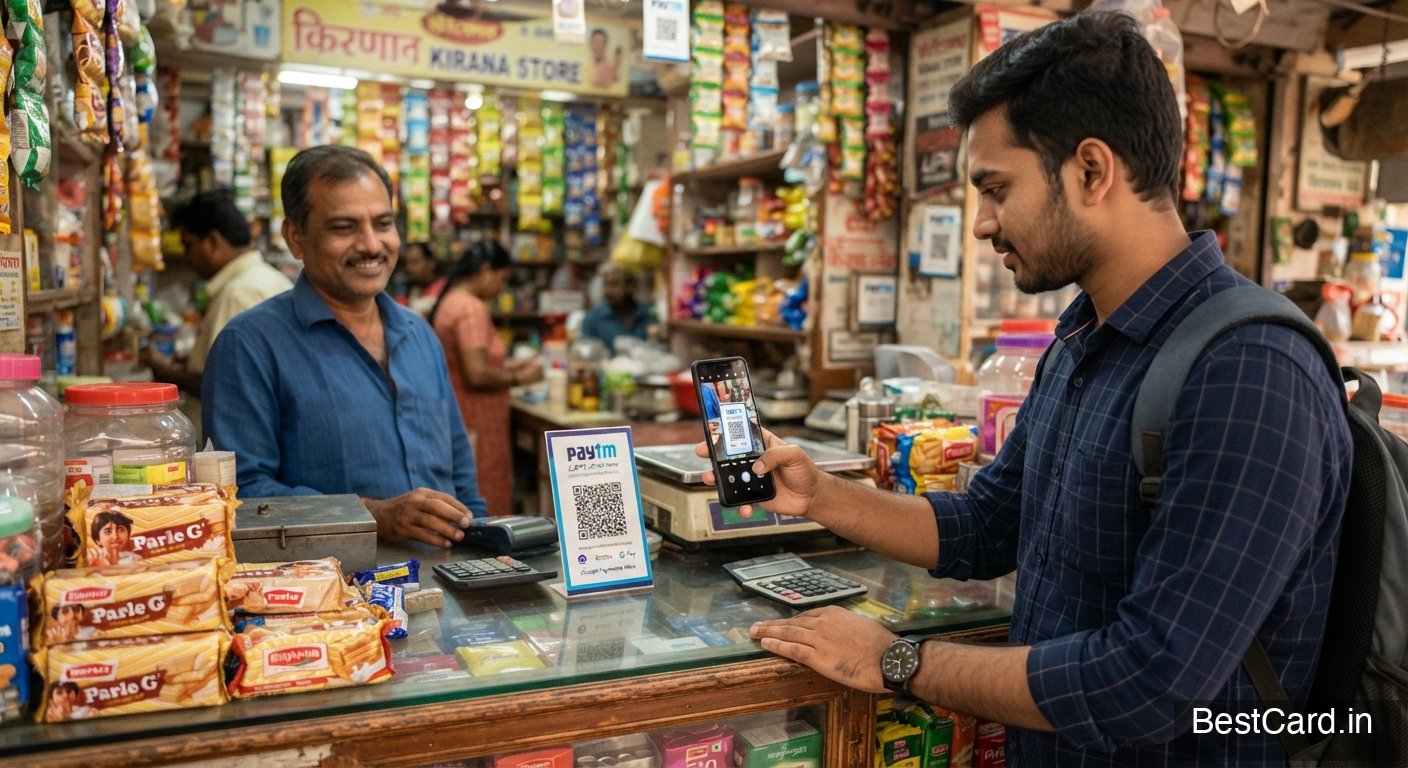
Three things decide whether a card is good for this: it needs to support RuPay-on-UPI linking in the first place (Visa and Mastercard credit cards can't be linked to UPI at all in India), it needs to reward UPI transactions at or near the card's standard rate rather than excluding or capping them, and it needs a reward structure that doesn't require a minimum transaction size to earn — some cards round down or ignore sub-₹100 transactions, which kills the value on a ₹20 chai purchase.
Cashback cards tend to work better than points cards here
For high-frequency, low-value spending, flat cashback beats tiered reward points almost every time, because you don't need to hit category thresholds or worry about redemption value — 1% back on a ₹30 auto ride is 1% back, no math required. The SBI Cashback Card is a reasonable fit if its RuPay variant is available to you and UPI is included in its earning categories — check the MITC before assuming so, since this changes without much notice. Compare it against our full best cashback cards roundup if you want to weigh other options against your existing spending mix.
RuPay variants from major issuers
SBI Card, Axis Bank, and a handful of other issuers now offer RuPay variants of some of their popular cards specifically to support UPI linkage — but "RuPay variant exists" doesn't automatically mean "rewards UPI well," so treat network support and reward eligibility as two separate checks, not one. If you're deciding between issuers generally, our SBI vs Axis comparison covers more ground beyond just UPI.
A practical approach
If your monthly UPI spend is genuinely small, don't over-optimize — any RuPay card that doesn't exclude UPI is fine. If it's a large share of your spending (some people now route rent, tuition, or business payments through UPI), it's worth actively hunting for a card whose MITC explicitly confirms full-rate UPI earning, since the difference between 0% and 1% compounds fast at volume. Either way, check the terms yourself rather than trusting a card's marketing page — that's the one step most people skip, and it's the one that actually determines whether daily UPI spend is worth anything on your card.